
Define the costing rules
Specify valuation method, material cost, item rates, expense processing, subcontracting and update time.
Separate planned costs
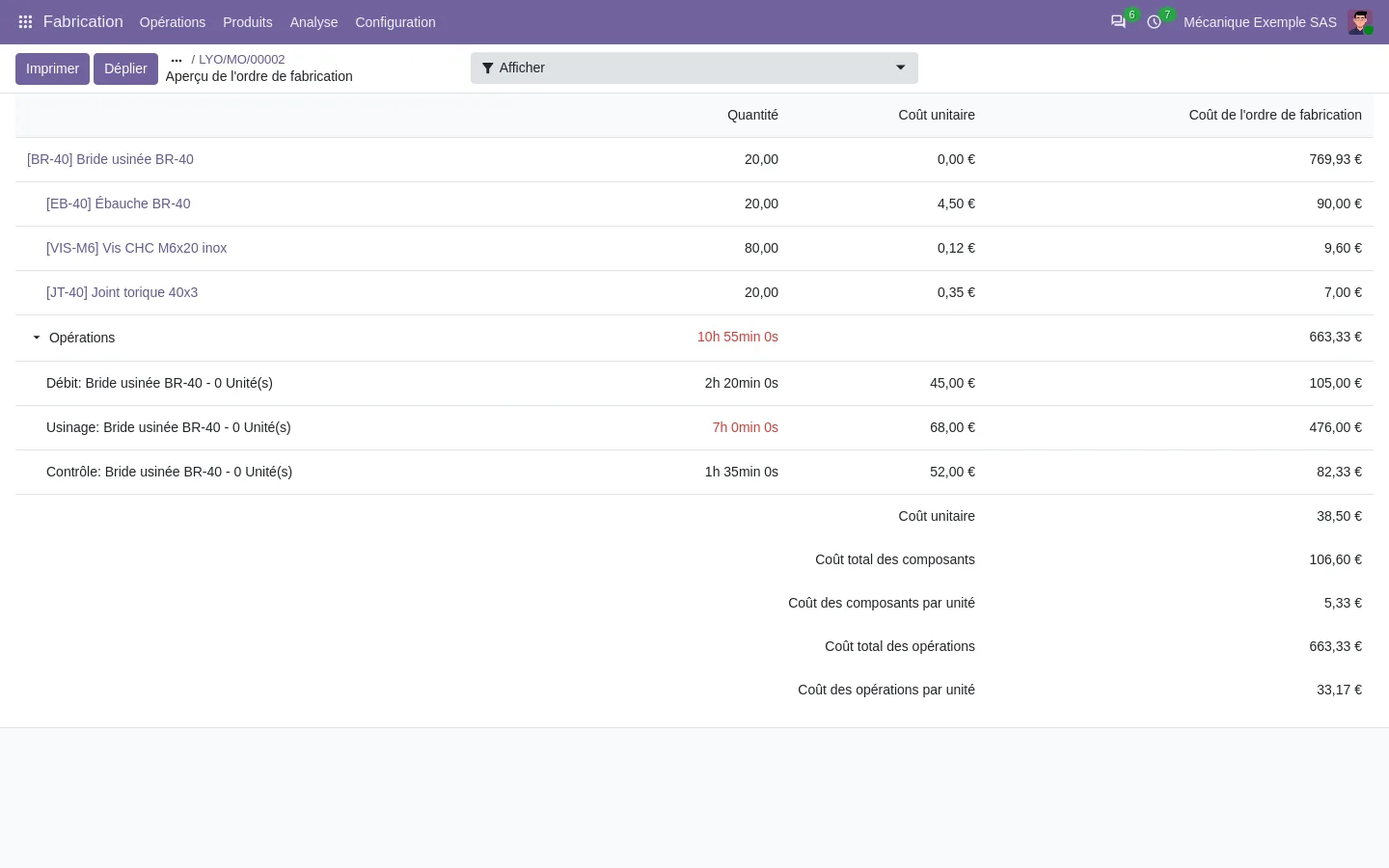
The expected cost comes from the bill of materials, quantities, times and rates at the time of calculation. There remains a hypothesis.
Collect actual data
Consumption, time, good quantities, scrap and external purchases must be recorded with sufficient quality.
Explain variances
Price, quantity, yield, time, failure, scrap, lot, currency or missing data: classify the cause before correcting.
Reconcile production and accounting
The operational value and the accounting entry may follow different times or rules. The financial manager validates the agreement.
Avoid false precision
A detailed calculation does not become accurate if the times or consumption are not reliable. Show the confidence level and missing data.
In Odoo Community, the order overview shows planned and actual cost, and a wizard proposes work-in-progress entries at a chosen date.